| 32)2 | 99.9% min |
| 6.0–9.0 | |
| H2O: | 100ppm max |
| F: | 20ppm max |
| 15ppm max | |
| 4: | 20ppm max |
| 1ppm max | |
| 5ppm max | |
| 1ppm max | |
| 2ppm max | |
| K: | 5ppm max |
| 1ppm max | |
| 10ppm max | |
| 1ppm max | |
| 1ppm max | |
| 5ppm max | |
| 1ppm max |
|
|
|
|
2923 |
|
|
H.S. Code |
2935900090303 |
|
The product is chemically stable under standard ambient conditions. |
|
|
Tightly closed. Dry. Keep in a well-ventilated place. Keep locked up or in an area accessible only to qualified or authorized persons. Handle and store under inert gas. |
|
|
Avoid moisture. |
|
1. Lithium-ion Batteries (LIBs)
LiTFSI is used as a lithium salt in the electrolyte solution of lithium-ion batteries, often as a replacement or complement to LiPF₆. It enhances:
Liquid electrolytes (carbonate-based solvents)
Solid polymer electrolytes (e.g., PEO-based)
2. Solid-State and Polymer Electrolytes
It is widely used with polyethylene oxide (PEO) or other polymer matrices to prepare solid-state batteries (SSBs) or all-solid-state lithium batteries (ASSLBs), which are seen as the future of safe, high-energy-density storage.
3. Supercapacitors
It can be used in both aqueous and non-aqueous systems.
4. Ionic Liquids and Electrolyte Additive
In this context, LiTFSI contributes to low flammability, non-volatility, and long-term electrolyte stability.
5. Electrochemical Devices
Lithium-sulfur (Li–S) batteries
Lithium-air (Li–O₂) batteries
LiTFSI helps improve ionic conductivity in low dielectric constant media and stabilizes interfaces (e.g., Li-metal anode/electrolyte).
6. Catalysis and Synthesis
As a phase-transfer agent or acid catalyst substitute
LiTFSI has a wide electrochemical window (up to 5.5V), making it suitable for high-voltage cathodes and next-generation batteries.
Thermally stable up to 300℃, far superior to LiPF₆, making it ideal for high-temperature operations and safer battery systems.
✅ Low Hygroscopicity and Non-Corrosiveness
Unlike LiPF₆, LiTFSI does not release HF (hydrofluoric acid) upon hydrolysis, reducing risks of corrosion and improving the lifetime of electrodes.
Enhances ion transport in both liquid and solid-state systems, which improves power output and charge/discharge efficiency.
Compatible with a broad range of solvents, polymers, and electrode materials, allowing versatile formulation of electrolytes.
Its stable anion (TFSI⁻) minimizes side reactions, SEI layer degradation, and thermal decomposition in comparison with other lithium salts.
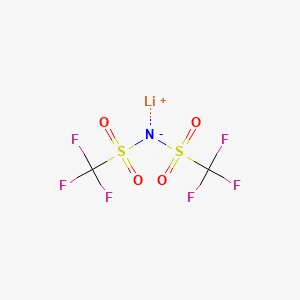
Lithium bis(trifluoromethanesulfonyl)imide (LiTFSI) is a premium lithium salt that plays a critical role in the evolution of energy storage technologies. With its outstanding thermal, chemical, and electrochemical properties, it enables the development of next-generation batteries, including solid-state, high-voltage, and long-life systems. Additionally, its stability and compatibility make it a versatile component in electrochemical research, ionic liquids, and advanced capacitor systems.
Beliebte label: lithium bis(trifluoromethanesulphonyl)imide丨cas 90076-65-6, China lithium bis(trifluoromethanesulphonyl)imide丨cas 90076-65-6 manufacturers, suppliers, factory, 16941-11-0, Ammoniumhexafluorophosphat, CAS 16941-11-0, Elektrische Chemikalien, Solarenergiematerialien